GDPR

EU’s DORA: Who will stand up for protection?

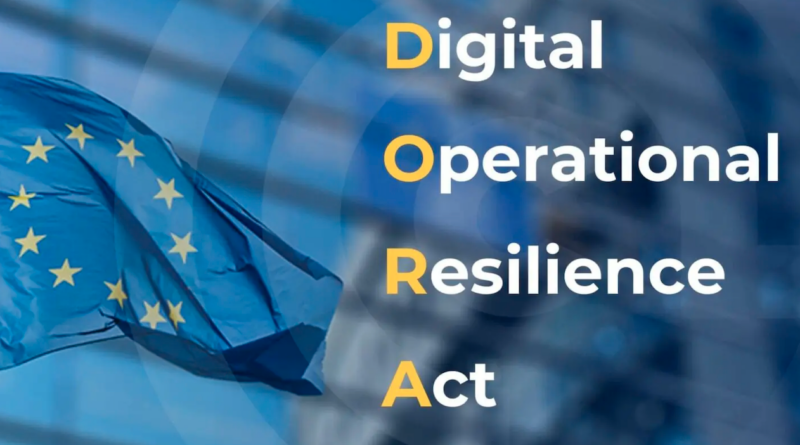
The EU's Digital Operational Resiliency Act (DORA) went live in January. This legislation's goals seem to conflict with the US administration’s willingness to ignore technology security standards. The question is: Who will stand up to protect corporate and consumer data?

DORA is highly targeted at the stability and resilience of the financial services sector. It ensures financial institutions can respond to, withstand, and recover from ICT-related threats and disruptions. It also requires robust strategies and policies to manage ICT risks in financial institutions.
Arnaud Treps, chief information security officer at Odaseva, said, “DORA is very different from previous regulation where you have to change where you operate. DORA is about having proper backups, the capability to restore quickly, and building redundancy.”

Europe takes the lead

But does the US rejecting data privacy regulation mean walling America off from the rest of the world? Meta has threatened to potentially limit


Free Membership Required

You must be a Free member to access this content.

Join Now

Already a member? Log in here
Read more...

Crossing the Compliance Chasm

There is a wide gap between regulatory compliance mandates and practical implementation and enforcement that I like to call the “Compliance Chasm”. That chasm is defined by the activity to protect consumers and consideration for the economic and operational impact on business enterprises. Finding that balance requires thought, not the more popular whack-a-mole enterprise strategy that reacts to new compliance mandates.

The frequency and size of regulatory fines are rising for non-compliance. In January 2023, Meta was fined $418 million for GDPR violations by Meta properties’ Facebook and Instagram. Ireland’s Data Protection Commission follows up in May that same year with a $1.3 billion fine for additional violations. And those were just the latest fines imposed on web giants, that also included Google and Amazon.

The targets of those fines might be justified in saying compliance is an impossible task. By 2025 the volume of data/information created, captured, copied, and consumed worldwide is forecast to reach 181 zettabytes. Nearly 80% of companies estimate that 50%-90% of their data is unstructured text, video, audio, web server logs, or social media activities.

Read more...

Beyond NIS2 – why regulations should just be the starting point for building better protection

NIS2 is an EU framework designed to provide “legal measures to boost the overall level of cybersecurity in the EU.” More specifically, it focuses on cybersecurity preparedness, crisis management and cooperation across member states as part of a harmonised “culture of security”.

Free Membership Required

You must be a Free member to access this content.

Join Now

Already a member? Log in here
Read more...

The future of online document signing

In an increasingly tech-savvy world, businesses are redefining the very core of transactions – the signature. With the rise of remote work and global digital transactions, the need for secure and efficient document processing has elevated electronic signatures into a near business-critical fundamental.

Free Membership Required

You must be a Free member to access this content.

Join Now

Already a member? Log in here
Read more...