
Analysis: Trump’s EO revives lethargic PQC sector
The Trump regime’s latest executive order (EO) last week is a shot in the arm to the moribund Post-Quantum Cryptography (PQC) market. The EO moved the technology from theoretical planning to mandating compliance from the federal government. This was in spite of the President’s asking before signing, “”Does anybody know what (quantum cryptography) is?“
The sector was in a “pilot plateau” industry without profitability since 2022. to make up for lack of growth it relied on panicked pronouncements of impending doom, sparked by the “harvest now, decrypt later” warnings from NIST. Company announcements and marketing messages slowly morphed to “Hey, look! A different way to encrypt!” The lack of finalized standards from NIST and binding deadlines caused most enterprises to pause significant spending in favor of cryptographic inventories and small-scale pilot programs. It didn’t help that PQC computer don’t exist because of a trillion-dollar cost.
Consulting for cash
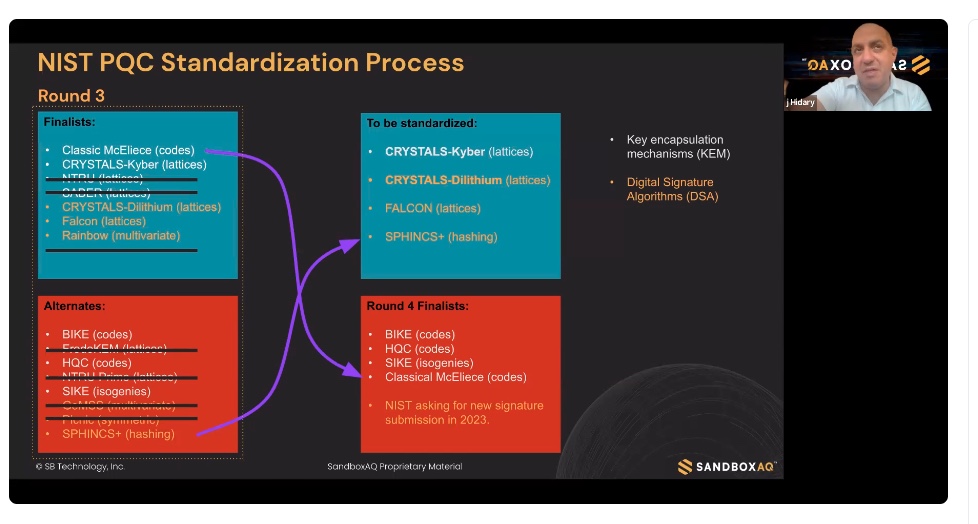
Consulting services and risk assessments drove market growth between 2023 and 2025 rather than large-scale product procurement. While more than 78% of organizations prioritized PQC, integration stalled due to integration complexity, high costs, and a “wait-and-see” approach regarding final NIST specifications (FIPS 203, 204, 205).
The plateau ended abruptly with the signing of the EO converting voluntary pilots into binding federal procurement requirements with hard deadlines. This should unlock the investment stuck in the planning phase.
The global PQC market size could jump to $2.1 billion in this year, reflecting immediate capital injection following the mandates. Quantum and cybersecurity stocks experienced immediate rallies, with investors shifting focus from pre-revenue quantum hardware firms to profitable PQC vendors with existing government contracts. Private firms are seeing increased valuation and funding opportunities. For instance, PQShield secured significant Series B funding to expand operations specifically to meet the “commercial imperative” created by government directives like CNSA 2.0 and the new EO.
The order directs federal agencies to migrate high-value assets to PQC for key establishment by December 31, 2030, and for digital signatures by December 31, 2031.
A boon to a SandboxAQ
This boon to the sector comes none to soon for one of the more visible, if less successful players, SandboxAQ. The AI-driven PQC player that spun out of Alphabet, hired two PR agencies; one to manage announcements and one for handle crisis communications over lawsuits and rumors of financial mismanagement. The company has a who’s who of investors but little to show in the form of revenue, like much of the AI industry. They’ve already put out a full-court press of announcements related to the EO, but declined to follow through when the litigation or Trump’s ignorance of the technology was brought up.
However, as Black Hat looms in the horizon, we can expect to see more announcements from the more than 7500 PQC related companies explaining how this makes them the leader in the arena.

Lou Covey is the Chief Editor for Cyber Protection Magazine. In 50 years as a journalist he covered American politics, education, religious history, women’s fashion, music, marketing technology, renewable energy, semiconductors, avionics. He is currently focused on cybersecurity and artificial intelligence. He published a book on renewable energy policy in 2020 and is writing a second one on technology aptitude. He hosts the Crucial Tech podcast.