Telemarketers are hated, but loved by criminals and entrepreneurs
Everyone hates telemarketers. If they can convince one or two suckers out of a thousand call to sign up, it………more...
Read more...


Everyone hates telemarketers. If they can convince one or two suckers out of a thousand call to sign up, it………more...

On Mastodon a poster asked last week, “Looking for an article or blog or text, that succinctly describes, at grade 1 level English, why ‘if you have nothing to hide, you have nothing to fear’ is a crazy and bad argument, and perhaps also includes what some good arguments are.” We thought that is an excellent idea for a Scam Bucket post. Let’s get to the biggest argument against that philosophy.
It may not be scandalous, like a drug addiction, pornography or drug dealing, but there is personal information that everyone wants to keep from someone like passwords, account number and routing number to your bank account, and social security numbers
People who ascribe to the philosophy will readily agree to those limitations of what should be available to public knowledge. What they may not be willing to admit that they have done something in their life that they are ashamed. As Jesus Christ once proclaimed, “No one is without sin. No, not one.”
Sometimes, the error is made in ignorance. Clicking on a link in an email that connects to a porn site. Being rude to a waiter or failing to give a tip. Road rage someone recorded without knowledge or consent. Sometimes it was a mistake they made when they were younger and didn’t know any better… or knew better and did it anyway.
Then there are things that people are totally innocent of but were accused of it anyway. An average of 200–300 people are arrested every year for felonies but are exonerated, according to the National Registry of Exonerations. If the arrest was reported in the news, it is likely the exoneration was not. So the news of the arrest still exists even though they did not commit the crime.
John Gilmore, director of research at the data-scrubbing service DeleteMe, related a story of Jordan Greene, a journalist who covered neo-Nazi rally in North Carolina. Members of the group picked out his face in a photo of the rally, ran it through facial recognition, found where he lived and showed up at his house holding burning flares.
A recent scam has arisen ...

State legislatures are scrambling hard to enact regulations of the cybersecurity and AI industries to protect them from themselves. And the leaders of those industries object to the efforts, like drug abusers forced into rehab.
For the past 10 years, the investor world shoveled money into any company that said they are focused on AI, but that support is starting to shake. Many AI startups that have received billions of investment are struggling financially, not the least of which is the elephant in the room, OpenAI. The most successful AI company in the world is on pace to lose $5 billion this year and, according to CEO Sam Altman, the company needs more than $8 billion more investment this year or will face bankruptcy inside 12 months.
Part of the loss of confidence in AI are the number of failures that seem to be increasing. The AI Incident Database, which chronicles incidents dating back to 1983, now contains 629 incidents. An even bigger reason is the self-governing rules the industry says it has adopted either don’t work or are ignored altogether.
The industry has generally acknowledged its weaknesses. More than a year ago, Altman sat before the US Senate essentially begging for the government to regulate the industry. Support for that legislation has waned, however, as 15 U.S. state legislatures are considering dozens of bills to regulate the development and use of artificial intelligence.
In a letter from OpenAI Chief Strategy Officer Jason Kwon to California Senator Scott Wiener (author of SB 1047), the company highlighted several reasons it opposed the bill, including the recommendation that regulation should be, "shaped and implemented at the federal level. A federally-driven set of AI policies, rather than a patchwork of state laws, will foster innovation and position the US to lead the development of global standards."
The “patchwork” argument has been used to oppose proposed laws in nine states. The problem with that is most federal laws come after a critical mass of laws at the state level. Historically, when two thirds of the sites pass similar laws, the US Congress considers standardizing them nationally. The US is less than halfway through that process.
The legislators authoring these bills seem to understand that they are not “experts” in technology and have been working with tech companies to make the bills more palatable. In California’s SB 1047, Weiner, removed provisions for criminal prosecution and an entirely new state bureaucracy to enforce the bill before it went to the governor’s desk last week. Instead, the bill merely directs the state attorney general to file civil charges when companies violate the mandates.
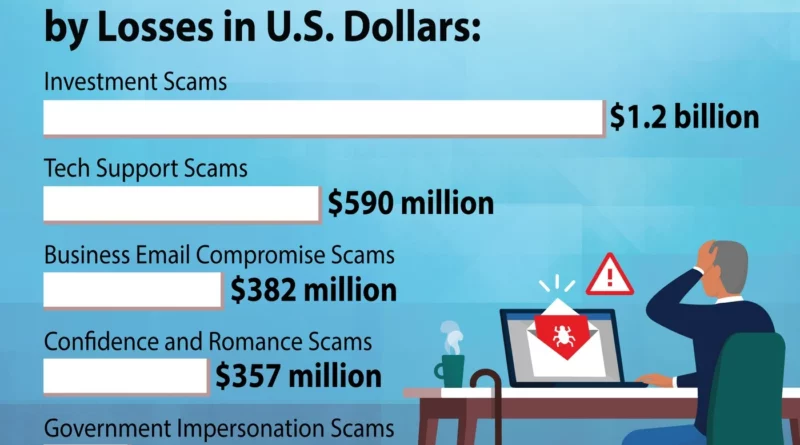
As legislatures around the world try to get a handle on the growth of ransomware, another category of cybercrime is festering out of control: Elder fraud.
The FBI’s Internet Crime Complaint Center (IC3) reported more than 100,000 people in the US, 60 years and older, lost $3.4 billion total to digital scams. The IC3 pointed out that the elderly are half as likely to report a loss. So the actual crimes and losses are probably much higher.
In contrast, the total ransomware payouts last year from reporting companies was $1.1 billion according to Chainanalysis. While the total number of fraud reports to the IC3 appears to have leveled off after years of growth, elder fraud increased by 14 percent year on year.
“Combatting the financial exploitation of those over 60 years of age continues to be a priority of the FBI,” wrote FBI Assistant Director Michael D. Nordwall, who leads the Bureau’s Criminal Investigative Division, in the report. “Along with our partners, we continually work to aid victims and to identify and investigate the individuals and criminal organizations that perpetrate these schemes and target the elderly.”
Who is vulnerable?

Ethics in AI is an afterthought in development, making adoption a risky proposition. New industry standards, such as ISO/IEC 42001, and rigorous testing for generative AI models, guided by established ethical principles in AI management, can ease apprehension surrounding the advancement of this truly transformative technology.
Huge hazards and pitfalls loom in AI adoption without adequate safeguards and guardrails. There’s potential for perpetuating stereotypes, spreading misinformation, advancing hate speech, hallucinating, exposing private data, and unforeseen harm. The potential for facing legal and financial consequences due to the inappropriate use of generative AI is genuine with devastating outcomes.

From our predictions issue: With the new year, CIOs must educate and prepare themselves for the upcoming obstacles they may face in the future and implement ways to stay ahead and double down to protect themselves and their clients from potential vulnerabilities.

From our predictions issue: The cybersecurity landscape in 2024 is poised for significant developments and challenges. This report offers valuable insights into the evolving threat landscape and the measures needed to mitigate risks effectively.

When it comes to technology, politicians and lawyers usually chime in on technology problems years after a product is on the market and well-adopted. But in 2024 government regulation, legislation and lawsuits, both criminal and civil, will influence the development of security and AI technology more than any innovation or market demand. And that’s just fine with industry… for the most part.
The SEC lawsuit against SolarWinds Corporation and CISO Tim Brown may upend an industry push for consolidation.…
Read more...
Finding content from legacy media is getting difficult in social media by design of the management of social media companies, while information from radicalized groups, hostile nation states, and paid political consultants currently makes up the bulk of information that these users call “news.”
Read more...