
IC3

Deepfakes in legal fraud unaddressed

Stopping fraud is a major focus of cybersecurity is criminal fraud. Largely, the industry is winning that war. Nowhere is that protection more successful than in combatting deepfake crime, even though industry marketing is geared to promote fear over success. Where deepfakes are causing the real problem is in legal fraud.

Digital fraud represents 0.02 percent of all fraud claims according the National Crime Insurance Bureau (NCIB). While there is evidence that criminal use of AI is increasing the number of attacks, the number of successful attacks is too low to warrant recording.

Deepfake crime a trifle

The FBI’s Internet Crime Complaint Center (IC3) lumps all forms of online fraud into a single category. Even so, the IC3 fielded 859,532 complaints of suspected internet crime in 2024. Of those complaints, 256,256 incidents resulted in actual monetary losses, representing an average loss of $19,372 per complaint. Overall, the reported losses exceeded $16.6 billion, a 33% increase from 2023. However, the top three cybercrimes in 2024 reported to IC3 were phishing/spoofing, extortion, and personal data breaches. None of those required the use of deepfake technology, and rarely did.

Extrapolating the data from NCIB with IC3’s indicates successful deepfake fraud cases were less than 50 in total in 2024 with 94% of those occurring during a spike of activity between November and December 2024.
Membership Required

You must be a member to access this content.

View Membership Levels

Already a member? Log in here
Read more...

Elder fraud festers out of control

As legislatures around the world try to get a handle on the growth of ransomware, another category of cybercrime is festering out of control: Elder fraud.
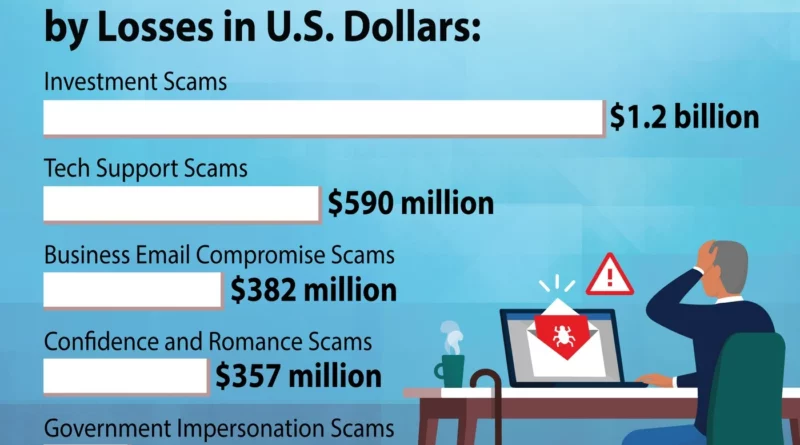
The FBI’s Internet Crime Complaint Center (IC3) reported more than 100,000 people in the US, 60 years and older, lost $3.4 billion total to digital scams. The IC3 pointed out that the elderly are half as likely to report a loss. So the actual crimes and losses are probably much higher.

In contrast, the total ransomware payouts last year from reporting companies was $1.1 billion according to Chainanalysis. While the total number of fraud reports to the IC3 appears to have leveled off after years of growth, elder fraud increased by 14 percent year on year.

“Combatting the financial exploitation of those over 60 years of age continues to be a priority of the FBI,” wrote FBI Assistant Director Michael D. Nordwall, who leads the Bureau’s Criminal Investigative Division, in the report. “Along with our partners, we continually work to aid victims and to identify and investigate the individuals and criminal organizations that perpetrate these schemes and target the elderly.” 

Who is vulnerable?

Membership Required

You must be a member to access this content.

View Membership Levels

Already a member? Log in here
Read more...