
Telemarketers are hated, but loved by criminals and entrepreneurs
Everyone hates telemarketers. If they can convince one or two suckers out of a thousand call to sign up, it………more...
Read more...

Everyone hates telemarketers. If they can convince one or two suckers out of a thousand call to sign up, it………more...

As we prepare for the annual October holiday season with Cybersecurity Awareness Month there is an important question to ask. Are we as a society at the point of fatigue over every new security breach, or are the companies getting breached just too big to fail?
Security giant Fortinet announced a data breach this week that was remarkable in two ways. One was how small the breach was (less than 500GB) Two was how calm Fortinet seemed to be about. Security gadfly Dr. Chase Cunningham posted a flippant comment about the breach on Linkedin, encouraging his followers to “buy on the breach.” He pointed out that with big public companies, in security or not, generally take a hit on their stock for a day or two after a breach, but the stock rises to new highs as the dust clears. And no one seems to care about the downstream customers whose data might have been stolen.
A 2010 study published in the Journal of Cost Management concluded that a company could be more profitable if it annoyed unhappy customers more than they already were. The success of that strategy increased with the size of the company, according to the study, and when there were fewer competitors for a customer to turn to.
The reasons for the success were simple. If a pissed off customer decided to go a smaller provider, there were always new customers who signed up, simply because they were the biggest. If there were no smaller competitors, the customer never went away. In the process, the offending company rarely has to pay out to make the customer whole. The study pointed our that companies like United Airlines have notoriously bad customer service, but they rarely lose market share because of it.
Kevin Szczepanski, co-chair of Barclay Damon's Data Security, is much more forgiving

On Mastodon a poster asked last week, “Looking for an article or blog or text, that succinctly describes, at grade 1 level English, why ‘if you have nothing to hide, you have nothing to fear’ is a crazy and bad argument, and perhaps also includes what some good arguments are.” We thought that is an excellent idea for a Scam Bucket post. Let’s get to the biggest argument against that philosophy.
It may not be scandalous, like a drug addiction, pornography or drug dealing, but there is personal information that everyone wants to keep from someone like passwords, account number and routing number to your bank account, and social security numbers
People who ascribe to the philosophy will readily agree to those limitations of what should be available to public knowledge. What they may not be willing to admit that they have done something in their life that they are ashamed. As Jesus Christ once proclaimed, “No one is without sin. No, not one.”
Sometimes, the error is made in ignorance. Clicking on a link in an email that connects to a porn site. Being rude to a waiter or failing to give a tip. Road rage someone recorded without knowledge or consent. Sometimes it was a mistake they made when they were younger and didn’t know any better… or knew better and did it anyway.
Then there are things that people are totally innocent of but were accused of it anyway. An average of 200–300 people are arrested every year for felonies but are exonerated, according to the National Registry of Exonerations. If the arrest was reported in the news, it is likely the exoneration was not. So the news of the arrest still exists even though they did not commit the crime.
John Gilmore, director of research at the data-scrubbing service DeleteMe, related a story of Jordan Greene, a journalist who covered neo-Nazi rally in North Carolina. Members of the group picked out his face in a photo of the rally, ran it through facial recognition, found where he lived and showed up at his house holding burning flares.
A recent scam has arisen ...

t seems like everyone should be concerned, based on the level of urgency the companies present, but in the end, no one has yet built a quantum computer capable of breaking even the most standard 256-bit encryption. To that statement, the industry responds with, “Yet.”
This year, however, the National Institute of Standards and Technology (NIST) issued the first, approved algorithm standards to produce encryptions capable of fighting off quantum computing attacks. So we thought it would be a good idea to put together a batch of experts to explain why the rest of us should care.
The invitation was put out to a dozen experts in the PQC industry, but also to the companies tasked with implementing their products into the internet. Unfortunately, none of the PQC companies ended up accepting the invitation when they learned they would on the same platform discussing their approaches. But we did get acceptances from representatives from the other group. Our final panel was Karl Holqvist, CEO of of Lastwall;; Tim Hollebeek, industry strategist for Digicert; and Murali Palanisamy, chief solutions officer of AppviewX.
The three companies both compete with and complement each other services, but all were active in the development of the standards with NIST. Our conversation is available on our podcast Crucial Tech.
However, there are still questions regarding the urgency, timing, and whether the introduction of quantum computing on an encryption-busting level is even possible in the near future.
The rest of this story is available with a subscription only.

State legislatures are scrambling hard to enact regulations of the cybersecurity and AI industries to protect them from themselves. And the leaders of those industries object to the efforts, like drug abusers forced into rehab.
For the past 10 years, the investor world shoveled money into any company that said they are focused on AI, but that support is starting to shake. Many AI startups that have received billions of investment are struggling financially, not the least of which is the elephant in the room, OpenAI. The most successful AI company in the world is on pace to lose $5 billion this year and, according to CEO Sam Altman, the company needs more than $8 billion more investment this year or will face bankruptcy inside 12 months.
Part of the loss of confidence in AI are the number of failures that seem to be increasing. The AI Incident Database, which chronicles incidents dating back to 1983, now contains 629 incidents. An even bigger reason is the self-governing rules the industry says it has adopted either don’t work or are ignored altogether.
The industry has generally acknowledged its weaknesses. More than a year ago, Altman sat before the US Senate essentially begging for the government to regulate the industry. Support for that legislation has waned, however, as 15 U.S. state legislatures are considering dozens of bills to regulate the development and use of artificial intelligence.
In a letter from OpenAI Chief Strategy Officer Jason Kwon to California Senator Scott Wiener (author of SB 1047), the company highlighted several reasons it opposed the bill, including the recommendation that regulation should be, "shaped and implemented at the federal level. A federally-driven set of AI policies, rather than a patchwork of state laws, will foster innovation and position the US to lead the development of global standards."
The “patchwork” argument has been used to oppose proposed laws in nine states. The problem with that is most federal laws come after a critical mass of laws at the state level. Historically, when two thirds of the sites pass similar laws, the US Congress considers standardizing them nationally. The US is less than halfway through that process.
The legislators authoring these bills seem to understand that they are not “experts” in technology and have been working with tech companies to make the bills more palatable. In California’s SB 1047, Weiner, removed provisions for criminal prosecution and an entirely new state bureaucracy to enforce the bill before it went to the governor’s desk last week. Instead, the bill merely directs the state attorney general to file civil charges when companies violate the mandates.

The English riots this past week provide a Dickensian “best of times…worst of times.” context to politics in the United Kingdom and possibly the United States later this year. The UK has had a significant political shift in leadership that brought relief to the majority of that countries citizens (the best) but also encouraged the minority opinion to lash out with provocation from domestic actors and foreign states (the worst). This highlight the fact that digital security concerns reaches far beyond the confines of corporate CISO offices.
The rioters are extreme anti-immigration nationalists whipped up by false information regarding the stabbing of several young children and adults at a dance recital in Southport, a town just north of Wales. The disinformation came from several sources but is primarily coming through a Russian-linked website posing as a legitimate American news organization. The claim was meanwhile amplified up by far-right figures Tommy Robinson and Andrew Tate. Robinson was arrested under anti-terrorism laws but is out on bail has been vacationing in Europe. He is still spreading disinformation. Tate is currently under “judicial supervision” for rape and human trafficking charges. X owner Elon Musk has also participated personally in sewing the discord.
Foreign interference grows
Meanwhile, open source intelligence monitored by companies like Zero Fox and Fletch have identified efforts by North Korea and Russia to interfere in elections of Western countries including Germany and the United States. Zero Fox said, “The Telegram-based bot service IntelFetch had been aggregating compromised credentials linked to the Democratic National Committee (DNC) and their websites. This data, primarily sourced from botnet logs and third-party breaches, includes sensitive information such as login credentials for party members and delegates. This breach poses a significant risk of unauthorized access and potential disruptions to the convention.”
Zero Fox said the DNC had been alerted several weeks ago and that the weaknesses fixed. The DNC Convention is set to begin August 19 and Zero Fox was planning on announcing their findings that day to boost their profile.
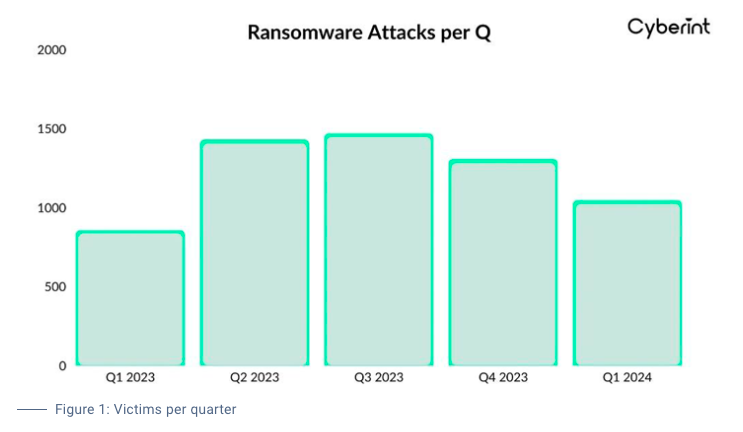
Cybercrime reports flowing out of marketing departments still highlight the danger of ransomware. However, a closer look at the numbers reveals a much different story and poses the question: Have we reached peak ransomware?
Last year, ransomware attacks hit all-time highs with paid ransoms exceeding $1.1 billion and attacks exceeding 5000, according to FBI and Interpol reports. However, looking at midyear reports from Cyberint, SonicWall and Check Point and a dozen others, attacks and ransoms paid have crashed. Still, the crime is not to be discounted, and industry recommendations are to double down on efforts to combat the “scourge”.
There are three reasons why the ransomware industry is hitting a wall.
Law enforcement agencies, working In cooperation, have found the means to identify and shutdown ransomware gang operations around the world.
Potential victims have learned hard lessons regarding the gangs’ willingness and ability to decrypt data, and becoming repeat targets. They are deciding in greater numbers to ignore ransom demands, cutting into revenue streams.
The “honor among thieves” philosophy does not relate to these criminals. Ransomware service providers are stiffing their affiliates, causing a fracturing of the criminal industry into multiple, independent gangs.

“Your security is important to us,” is a common phrase on corporate websites and emails, usually after some data breach that affects customers. To prove that statement, corporations invest billions of dollars in the cybersecurity industry. Most market projections say the industry is worth about $180 billion. About 15 percent of that market goes to data security. But all the indications are that we are losing the war in personal identity security That leaves is with the question: Do corporations really care about customer security?
Probably not
US Department of Health and Human Services reported recently that. in the US, there have been 2,213 breaches since 2020, with 152.1M affected individuals. That is almost half of the American population. But that is just breaches involving medical data.
The FBI reports, in the same period, more than 350 million stolen personal information records, exceeding the known population of the country. Worldwide, the number of personal identity information (PII) records exceeds one billion people.
So how bad is it? “I always tell people assume your social security number has been breached. Just assume that,” said John Meyer, senior director for Cornerstone Advisors, an organization providing security consultation to financial organizations.
So we are spending tens of billions of dollars to protect data from exfiltratation on almost a weekly basis from attacks bypassing current defenses. Is it worth the investment? Does protecting that data even matter?
Well, yes… sort of
Data security professionals say it is and it does. Communications, industry intellectual property, state secrets, and control of crucial systems must still be protected. Most professionals we talked to cite ransomware attacks as the primary reason for investing in security precuts and services.

When it comes to election security, the technology we use to vote and count those votes is not the problem. The problem is how naive we are.
Election security has been at the forefront of daily news cycles for more a decade. The concerns about illicit use of technology to input and count the votes turned out to be largely overblown. Every U.S. state other than the Commonwealth of Louisiana, uses paper ballots, matching the practice of every other western democracy. Lawsuits have bankrupted people and organizations claiming the technology was changing votes. Those that have complained the loudest about election interference are now facing prosecution for the crimes.
Now the tech focus is on the use of artificial Intelligence to create deepfake video and audio. A recent pitch from Surfshark,
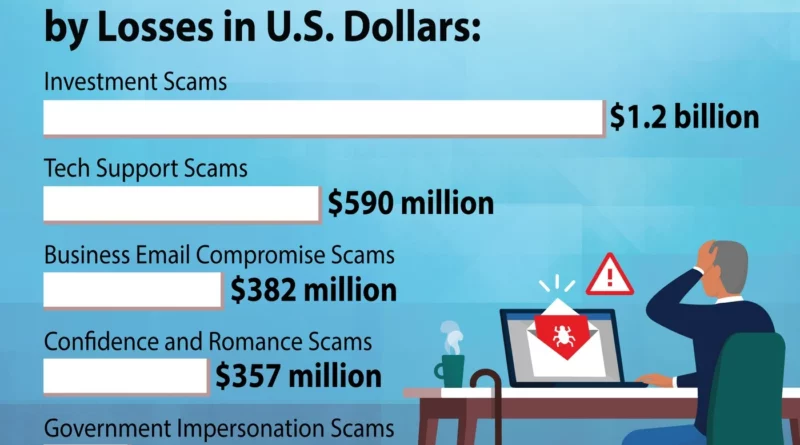
As legislatures around the world try to get a handle on the growth of ransomware, another category of cybercrime is festering out of control: Elder fraud.
The FBI’s Internet Crime Complaint Center (IC3) reported more than 100,000 people in the US, 60 years and older, lost $3.4 billion total to digital scams. The IC3 pointed out that the elderly are half as likely to report a loss. So the actual crimes and losses are probably much higher.
In contrast, the total ransomware payouts last year from reporting companies was $1.1 billion according to Chainanalysis. While the total number of fraud reports to the IC3 appears to have leveled off after years of growth, elder fraud increased by 14 percent year on year.
“Combatting the financial exploitation of those over 60 years of age continues to be a priority of the FBI,” wrote FBI Assistant Director Michael D. Nordwall, who leads the Bureau’s Criminal Investigative Division, in the report. “Along with our partners, we continually work to aid victims and to identify and investigate the individuals and criminal organizations that perpetrate these schemes and target the elderly.”
Who is vulnerable?