21% of people have never made a backup - a figure even more concerning given 30% of all computers are already infected with malware. These numbers are a stark reminder of the need to put backups at the forefront of every business leader’s mind; it is time to take action on data protection.
The rapid and continuous advances in information technology are among the greatest drivers of contemporary business. However, as with any technological progress, organizations must remain vigilant in securing these innovations against misuse and failure. As a result, managing cyber risks is a key priority for all enterprises.
The DDoS attack on X.com this week provided a certain amount of schadenfreude for people less than enamored by Elon Musk. It also rang alarm bells in the cybersecurity community.
Premium Membership Required
You must be a Premium member to access this content.
Space systems have become an indispensable component of modern infrastructure, supporting global communications, navigation, defense, and scientific exploration. Cybersecurity, once an afterthought in space mission design, is now a critical priority.
For this year’s International Women’s Day, considering what’s going on in the world, it’s more important than ever to reflect on gender equality in the workplace. The theme for this year is “Accelerate Action,” focusing on hastening the progress toward equality for women.
We recently sat down with Sarah Armstrong-Smith, Microsoft Europe’s Chief Security advisor and advocate for female representation in STEM subjects.…...
Phishing attacks are on the rise again with the help of sophisticated generative-AI tools. However, new defenses and increased wariness among potential victims are blunting phishing’s potential for widespread harm.
Picture a fortress with impenetrable walls protecting valuable assets inside. For decades, organisations built digital security following this ancient model – constructing firewalls and intrusion detection systems around a trusted internal network. But business has fundamentally changed. Remote work, cloud services, and digital partnerships have blown holes through these walls, creating countless paths for data to flow beyond traditional boundaries.
Discovering a cyberattack requires combining people, processes, and technology. A proper detection system is needed to sound the alarm, but people with the right skills must react to the emergency.
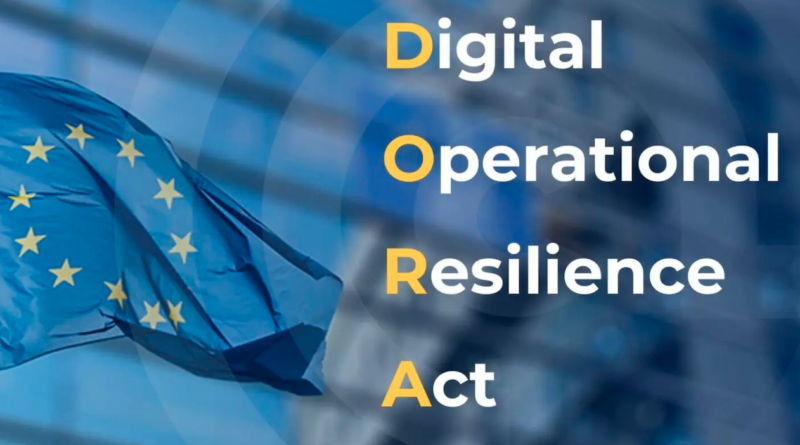
The EU's Digital Operational Resiliency Act (DORA) went live in January. This legislation's goals seem to conflict with the US administration’s willingness to ignore technology security standards. The question is: Who will stand up to protect corporate and consumer data?
DORA is highly targeted at the stability and resilience of the financial services sector. It ensures financial institutions can respond to, withstand, and recover from ICT-related threats and disruptions. It also requires robust strategies and policies to manage ICT risks in financial institutions.
Arnaud Treps, chief information security officer at Odaseva, said, “DORA is very different from previous regulation where you have to change where you operate. DORA is about having proper backups, the capability to restore quickly, and building redundancy.”
Europe takes the lead
But does the US rejecting data privacy regulation mean walling America off from the rest of the world? Meta has threatened to potentially limit
We use cookies on our website to give you the most relevant experience by remembering your preferences and repeat visits. By clicking “Accept”, you consent to the use of ALL the cookies.
This website uses cookies to improve your experience while you navigate through the website. Out of these cookies, the cookies that are categorized as necessary are stored on your browser as they are essential for the working of basic functionalities of the website. We also use third-party cookies that help us analyze and understand how you use this website. These cookies will be stored in your browser only with your consent. You also have the option to opt-out of these cookies. But opting out of some of these cookies may have an effect on your browsing experience.
Necessary cookies are absolutely essential for the website to function properly. This category only includes cookies that ensures basic functionalities and security features of the website. These cookies do not store any personal information.
Any cookies that may not be particularly necessary for the website to function and is used specifically to collect user personal data via analytics, ads, other embedded contents are termed as non-necessary cookies. It is mandatory to procure user consent prior to running these cookies on your website.