Quantum computing

Reporter’s Notebook: What happened to ‘Q-Day’?

Time to dig into the RSAC Conference notes. It was only three years ago that vendors were warning of Q-day, the day quantum computers could break current encryption, filled the pages of technology publications and even general news outlets. Those warnings are much more muted this year. What happened?

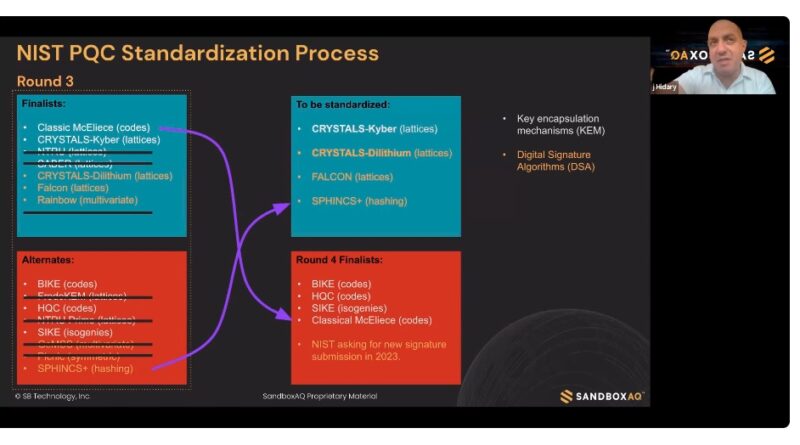
Primarily, the work of NIST solved the issue in setting new standards for encryption. All the post-quantum computing companies, like PQShield and SandboxAQ, are offering encryption products that are more alike than they are different and all are doing good business providing tools and services. We seem to be more than ready for the dreaded Q-Day.

Then, again, the progress on creating an encryption-breaking quantum computer is maddeningly slow. The industry still insists 2029 is the Q day ETA, and it will break military-grade encryption in one week… on a single document. Assuming a nation state that has such a computer has stolen 20,000 encrypted documents, it would take 38 years to decrypt them all. But the number of stolen encrypted documents, although inestimable, is probably orders of magnitude higher. So reality mutes the projections of potential disaster.


Premium Membership Required

You must be a Premium member to access this content.

Join Now

Already a member? Log in here
Read more...

An encryption primer: Don’t wait

Encryption became a hot topic in the news in the past month. The United Kingdom, Sweden, France and the EU are considering requiring “back doors” to encryption protections. The “Signalgate” scandal in Washington, DC started most people asking, “What is this encryption stuff?” So we decided to provide a primer on the state of encryption today.

While the technology behind encryption is complex, it is not new. The basic algorithms have been with us for decades, silently running on devices and servers, invisible to the user. The purpose is basic: to keep data safe from prying eyes, like criminals and nation states.

Encryption is also a good way of saving money and not just in avoiding ransoms. Insurance companies often offer up to 15% premium discounts to businesses demonstrating strong security practices, including proper data encryption. Encryption significantly reduces the risk of data breaches and their associated costs.

Membership Required

You must be a member to access this content.

View Membership Levels

Already a member? Log in here
Read more...

Getting serious about PQC

t seems like everyone should be concerned, based on the level of urgency the companies present, but in the end, no one has yet built a quantum computer capable of breaking even the most standard 256-bit encryption. To that statement, the industry responds with, “Yet.”

This year, however, the National Institute of Standards and Technology (NIST) issued the first, approved algorithm standards to produce encryptions capable of fighting off quantum computing attacks. So we thought it would be a good idea to put together a batch of experts to explain why the rest of us should care.

The invitation was put out to a dozen experts in the PQC industry, but also to the companies tasked with implementing their products into the internet. Unfortunately, none of the PQC companies ended up accepting the invitation when they learned they would on the same platform discussing their approaches. But we did get acceptances from representatives from the other group. Our final panel was Karl Holqvist, CEO of of Lastwall;; Tim Hollebeek, industry strategist for Digicert; and Murali Palanisamy, chief solutions officer of AppviewX.

The three companies both compete with and complement each other services, but all were active in the development of the standards with NIST. Our conversation is available on our podcast Crucial Tech.

However, there are still questions regarding the urgency, timing, and whether the introduction of quantum computing on an encryption-busting level is even possible in the near future.

The rest of this story is available with a subscription only.

Membership Required

You must be a member to access this content.

View Membership Levels

Already a member? Log in here
Read more...