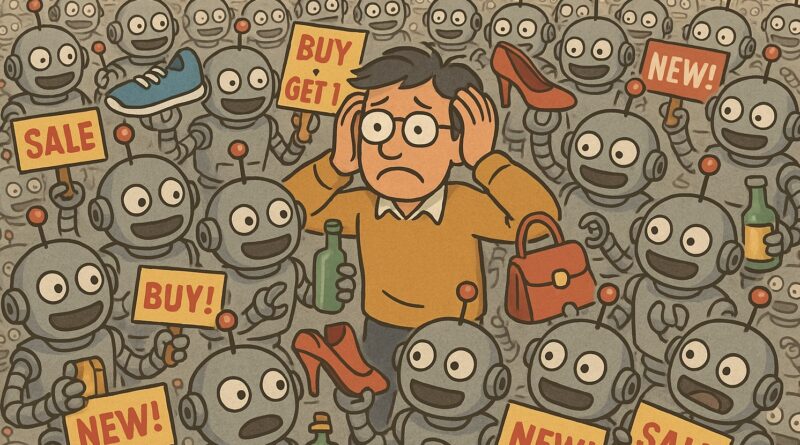
You’ve done this many times. Checking your email you find a ton of spam, especially from this one organization or person. You are finally tired of it. You search the email for the “unsubscribe” link, buried somewhere on the bottom, and are about to click it.
Bots have been around for more than half a century to automate repetitive tasks and provide services on early internet platforms. The first was ELIZA, developed as a research project in 1966 at the Massachusetts Institute of Technology (MIT) the goal was to simulate conversations with a human being. ELIZA conversed with users, although it did not understand what the user was saying. Artificial intelligence chatbots are much more sophisticated versions of ELIZA, but still lack human comprehension.
Bots not replacements
The purpose of ELIZA was to determine if computers could replace psychoanalysts. Consequentially, it was the first time the prediction that computer could replace humans had some hard evidence. Today, there are mental-health AI applications with not much better results than ELIZA but projected to have a $8 billion market by 2032.
In 1988, the earliest broad use of bots was Internet Relay Chat (IRC) automating user list management, searches, and providing services like weather updates or game scores. But these were not known as bots at the time. They were called automations and still required a human interface to operate,
Premium Membership Required
You must be a Premium member to access this content.
Like most companies, the cybersecurity industry uses bad or misleading statistics to frighten customers into buying their products and services….……more...
Last week, Dr. Zero Trust, AKA Dr. Chase Cunningham, posted in Linkedin that he was fed up with people who say they don’t understand Zero Trust. To a certain extent, I feel his frustration.
Journalists understand the concept. We have a decades-old saying, “If your mother says she loves you, check it out.” It doesn’t get more zero trust than that.
The problem is that while it’s easy to understand as a concept, it isn’t easy to build a zero trust infrastructure, especially with the misleading gobbledygook most cybersecurity companies put out. Cunningham says there are hundred of books and articles on the subject. He’s right, of course. The question is, which one do you choose?
At the RSAC Conference, We sat down and briefly talked with Dale Hoak, CISO for RegScale, about how easy it is to understand Zero Trust
ibuted and democratic, according to renowned security technologist, Bruce Schneier, not controlled by corporations. Developments in the past few weeks indicate he may be right.
Speaking at the RSAC Conference in San Francisco last week, Schneier talked of trust and how we give it to people, strangers, organizations, and technology. His description of that process predicted the development of artificial intelligence controlled almost exclusively by the user, rather than the dystopian corporate AI replacing humanity.
Anonymous hacked and downloaded passenger manifests, containing the names and information on deported migrants, that Trump administration lawyers have told………more...
Ordering investigations and revoking security clearances for former CISA director Chris Krebs, along with several other employees of federal contractormore
Encryption became a hot topic in the news in the past month. The United Kingdom, Sweden, France and the EU are considering requiring “back doors” to encryption protections. The “Signalgate” scandal in Washington, DC started most people asking, “What is this encryption stuff?” So we decided to provide a primer on the state of encryption today.
While the technology behind encryption is complex, it is not new. The basic algorithms have been with us for decades, silently running on devices and servers, invisible to the user. The purpose is basic: to keep data safe from prying eyes, like criminals and nation states.
Encryption is also a good way of saving money and not just in avoiding ransoms. Insurance companies often offer up to 15% premium discounts to businesses demonstrating strong security practices, including proper data encryption. Encryption significantly reduces the risk of data breaches and their associated costs.
We use cookies on our website to give you the most relevant experience by remembering your preferences and repeat visits. By clicking “Accept”, you consent to the use of ALL the cookies.
This website uses cookies to improve your experience while you navigate through the website. Out of these cookies, the cookies that are categorized as necessary are stored on your browser as they are essential for the working of basic functionalities of the website. We also use third-party cookies that help us analyze and understand how you use this website. These cookies will be stored in your browser only with your consent. You also have the option to opt-out of these cookies. But opting out of some of these cookies may have an effect on your browsing experience.
Necessary cookies are absolutely essential for the website to function properly. This category only includes cookies that ensures basic functionalities and security features of the website. These cookies do not store any personal information.
Any cookies that may not be particularly necessary for the website to function and is used specifically to collect user personal data via analytics, ads, other embedded contents are termed as non-necessary cookies. It is mandatory to procure user consent prior to running these cookies on your website.