marketing

Is cyber training worth the effort?

There has been a debate within the cybersecurity industry regarding cyber training effectiveness. On one side are tool providers who claim technology trumps training in securing data, networks, and people. On the other side is the $10-billion cyber training industry, growing at 20 percent per year. That says they must be doing something right.

The real answer is not black and white.
The naysayers point to a recent study done by UC San Diego of its own employee training program. The study said, “Cybersecurity training programs as implemented today by most large companies do little to reduce the risk that employees will fall for phishing scams.” It was a comprehensive study of more than 19,000 university and student employees concluded in the summer of 2025. Seems like a slam dunk, doesn’t it?
Not so fast.

Membership Required

You must be a member to access this content.

View Membership Levels

Already a member? Log in here
Read more...

Bolaji Ojo and renewed importance of the press

Technology journalism, like the rest of journalism,has struggled for most of the 21st century. The advent of AI generated content his restoring the value of professional journalists. It is crucial not just to democracies but to business success.

One of the most prolific and successful technology journalists is Bolaji Ojo. He has headed editorial efforts for the EETimes, AspenCore Media, the recently closed Ojo-Yoshida Report and the now-defunct EBN. Some of those titles may be foreign to people in the cybersecurity world, but not to executives in the electronics world that cybersecurity rests upon. Cyber Protection Magazine's chief editor talked with him this week.

Free Membership Required

You must be a Free member to access this content.

Join Now

Already a member? Log in here
Read more...

Security industry addicted to bland marketing

There is no question that the cybersecurity industry performs a vital role in keeping the digital world safe.  It’s too bad the industry is so dedicated to bland, repetitive and un-informational marketing and research.

The problem doesn’t exist with cybersecurity alone.  Every tech industry under finances and plagiarizes marketing communications both within and without their niches, but the problem in security is that there is so little actual data to refer to, it is easy to make it up and still be believed.  The introduction of AI into marketing efforts definitely cuts down the price and effort of communications, but it makes the bland and repetitive content even more bland, repetitive while making it less informative than when humans are actually involved.

Anyone involved in the process of evaluating this content and mining nuggets of relevant truth knows the problem and some are trying to do something about it.  James Bore is one of them.

Read more...

Pig butchering: Proving the Luddites right

Pig-butchering may be proving the Luddites were right. The social-engineering scam bypassed ransomware as the most profitable cybercrime approximately two years ago. After government regulations and law enforcement took a big bite out of returns for ransomware this past year, public-private partnerships are taking aim at the new champ.

TL;DR
* Pig butchering eclipses losses from ransomware
* Top targets are tech savvy people under 50
* Human error trumps cyber awareness
* Public/private partnerships making inroads at dismantling scam operations
* Tips to avoid scams
* Podcast with Arkose CEO
Between 2020 and 20023, scammers reaped more than $75 billion from victims around the world. Approximately 90 percent of the losses came from of purchasing fraudulent cryptocurrency, according to the US Treasury Department’s, Financial Crimes Enforcement Center. In comparison, ransomware attacks in that same period harvested $20 billion worldwide in ransoms and cost approximately another $20 billion in recovery costs.

Membership Required

You must be a member to access this content.

View Membership Levels

Already a member? Log in here
Read more...

Breach fatigue or too big to fail?

As we prepare for the annual October holiday season with Cybersecurity Awareness Month there is an important question to ask. Are we as a society at the point of fatigue over every new security breach, or are the companies getting breached just too big to fail?

Security giant Fortinet announced a data breach this week that was remarkable in two ways. One was how small the breach was (less than 500GB) Two was how calm Fortinet seemed to be about. Security gadfly Dr. Chase Cunningham posted a flippant comment about the breach on Linkedin, encouraging his followers to “buy on the breach.” He pointed out that with big public companies, in security or not, generally take a hit on their stock for a day or two after a breach, but the stock rises to new highs as the dust clears. And no one seems to care about the downstream customers whose data might have been stolen.

A 2010 study published in the Journal of Cost Management concluded that a company could be more profitable if it annoyed unhappy customers more than they already were. The success of that strategy increased with the size of the company, according to the study, and when there were fewer competitors for a customer to turn to.

The reasons for the success were simple. If a pissed off customer decided to go a smaller provider, there were always new customers who signed up, simply because they were the biggest. If there were no smaller competitors, the customer never went away. In the process, the offending company rarely has to pay out to make the customer whole. The study pointed our that companies like United Airlines have notoriously bad customer service, but they rarely lose market share because of it.

Kevin Szczepanski, co-chair of Barclay Damon's Data Security, is much more forgiving

Membership Required

You must be a member to access this content.

View Membership Levels

Already a member? Log in here
Read more...

Media training offered for cyber industry

“Over the years, the content of news releases, websites and other marketing materials has become formulaic. We know what that formula is and it hurts company credibility,” said Covey.” The repetition in that content obscures the real story of these companies and the sheer volume of it overwhelms the few qualified journalists still working. The use of generative AI makes the problem worse. Generative AI uses the same, repetitive marketing language because that’s how it’s trained on. That results in homogenized messaging, destroying differentiation. This program will restore differentiation and, in the process, make it easier for us to accept and report on industry news. It’s a win-win.”

Read more...

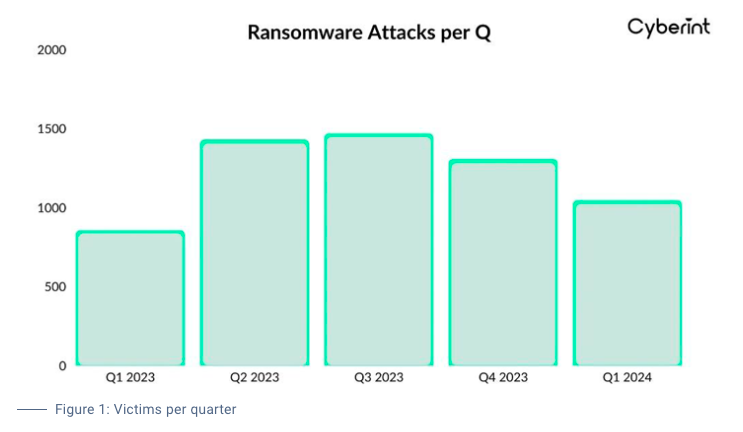
Have we reached peak ransomware?

Cybercrime reports flowing out of marketing departments still highlight the danger of ransomware. However, a closer look at the numbers reveals a much different story and poses the question: Have we reached peak ransomware?

Last year, ransomware attacks hit all-time highs with paid ransoms exceeding $1.1 billion and attacks exceeding 5000, according to FBI and Interpol reports. However, looking at midyear reports from Cyberint, SonicWall and Check Point and a dozen others, attacks and ransoms paid have crashed. Still, the crime is not to be discounted, and industry recommendations are to double down on efforts to combat the “scourge”.

There are three reasons why the ransomware industry is hitting a wall.

Law enforcement agencies, working In cooperation, have found the means to identify and shutdown ransomware gang operations around the world.
Potential victims have learned hard lessons regarding the gangs’ willingness and ability to decrypt data, and becoming repeat targets. They are deciding in greater numbers to ignore ransom demands, cutting into revenue streams.

The “honor among thieves” philosophy does not relate to these criminals. Ransomware service providers are stiffing their affiliates, causing a fracturing of the criminal industry into multiple, independent gangs.

Premium Membership Required

You must be a Premium member to access this content.

Join Now

Already a member? Log in here
Read more...

Election security is not a technology problem. It is how naive we are

When it comes to election security, the technology we use to vote and count those votes is not the problem. The problem is how naive we are.

Election security has been at the forefront of daily news cycles for more a decade. The concerns about illicit use of technology to input and count the votes turned out to be largely overblown. Every U.S. state other than the Commonwealth of Louisiana, uses paper ballots, matching the practice of every other western democracy. Lawsuits have bankrupted people and organizations claiming the technology was changing votes. Those that have complained the loudest about election interference are now facing prosecution for the crimes.

Now the tech focus is on the use of artificial Intelligence to create deepfake video and audio. A recent pitch from Surfshark,

Membership Required

You must be a member to access this content.

View Membership Levels

Already a member? Log in here
Read more...