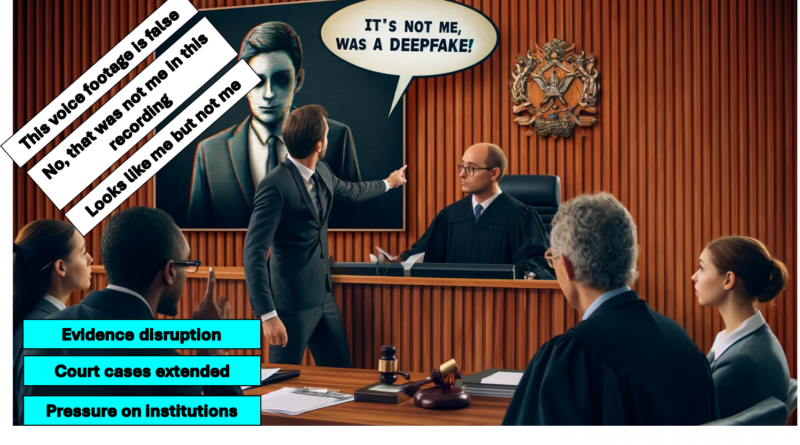
Deepfake can affect our society including misinformation, fake news, political destabilisation, cyber-espionage, copyright and more, disturbing scenarios.
There is a need to detect what is real to prevent/reduce the impact of these threats.
The English riots this past week provide a Dickensian “best of times…worst of times.” context to politics in the United Kingdom and possibly the United States later this year. The UK has had a significant political shift in leadership that brought relief to the majority of that countries citizens (the best) but also encouraged the minority opinion to lash out with provocation from domestic actors and foreign states (the worst). This highlight the fact that digital security concerns reaches far beyond the confines of corporate CISO offices.
The rioters are extreme anti-immigration nationalists whipped up by false information regarding the stabbing of several young children and adults at a dance recital in Southport, a town just north of Wales. The disinformation came from several sources but is primarily coming through a Russian-linked website posing as a legitimate American news organization. The claim was meanwhile amplified up by far-right figures Tommy Robinson and Andrew Tate. Robinson was arrested under anti-terrorism laws but is out on bail has been vacationing in Europe. He is still spreading disinformation. Tate is currently under “judicial supervision” for rape and human trafficking charges. X owner Elon Musk has also participated personally in sewing the discord.
Foreign interference grows
Meanwhile, open source intelligence monitored by companies like Zero Fox and Fletch have identified efforts by North Korea and Russia to interfere in elections of Western countries including Germany and the United States. Zero Fox said, “The Telegram-based bot service IntelFetch had been aggregating compromised credentials linked to the Democratic National Committee (DNC) and their websites. This data, primarily sourced from botnet logs and third-party breaches, includes sensitive information such as login credentials for party members and delegates. This breach poses a significant risk of unauthorized access and potential disruptions to the convention.”
Zero Fox said the DNC had been alerted several weeks ago and that the weaknesses fixed. The DNC Convention is set to begin August 19 and Zero Fox was planning on announcing their findings that day to boost their profile.
“Over the years, the content of news releases, websites and other marketing materials has become formulaic. We know what that formula is and it hurts company credibility,” said Covey.” The repetition in that content obscures the real story of these companies and the sheer volume of it overwhelms the few qualified journalists still working. The use of generative AI makes the problem worse. Generative AI uses the same, repetitive marketing language because that’s how it’s trained on. That results in homogenized messaging, destroying differentiation. This program will restore differentiation and, in the process, make it easier for us to accept and report on industry news. It’s a win-win.”
Keeping up with requirements has caused financial organizations to rapidly overhaul their IT infrastructure. Because of this rapid digitalization, organizations are consuming many different security solutions creating a bespoke environment that inadvertently exposes them to cyber threats.
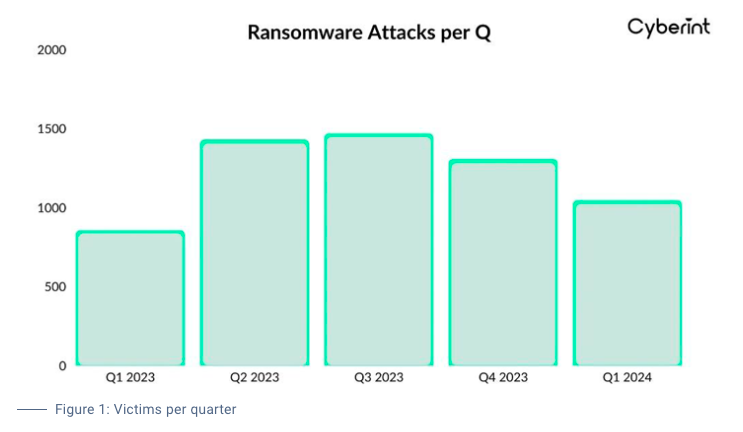
Cybercrime reports flowing out of marketing departments still highlight the danger of ransomware. However, a closer look at the numbers reveals a much different story and poses the question: Have we reached peak ransomware?
Last year, ransomware attacks hit all-time highs with paid ransoms exceeding $1.1 billion and attacks exceeding 5000, according to FBI and Interpol reports. However, looking at midyear reports from Cyberint, SonicWall and Check Point and a dozen others, attacks and ransoms paid have crashed. Still, the crime is not to be discounted, and industry recommendations are to double down on efforts to combat the “scourge”.
There are three reasons why the ransomware industry is hitting a wall.
Law enforcement agencies, working In cooperation, have found the means to identify and shutdown ransomware gang operations around the world.
Potential victims have learned hard lessons regarding the gangs’ willingness and ability to decrypt data, and becoming repeat targets. They are deciding in greater numbers to ignore ransom demands, cutting into revenue streams.
The “honor among thieves” philosophy does not relate to these criminals. Ransomware service providers are stiffing their affiliates, causing a fracturing of the criminal industry into multiple, independent gangs.
Premium Membership Required
You must be a Premium member to access this content.
Remote working is here to stay. Security policies may be in place outlining acceptable use and connectivity requirements but it’s essentially down to the worker to abide by them and not to seek to circumvent controls. However, recent research suggests that trust is being sorely tested.
Ransomware vulnerability is typically exacerbated by immature security programs, leaving organizations susceptible to a variety of infiltration tactics. Additionally, a lack of security culture within companies increases susceptibility to ransomware attacks.
Small businesses face a myriad of cybersecurity threats, with ransomware and malware being the most prevalent. The consequences of such breaches can be profound and multifaceted, affecting various aspects of the business.
We use cookies on our website to give you the most relevant experience by remembering your preferences and repeat visits. By clicking “Accept”, you consent to the use of ALL the cookies.
This website uses cookies to improve your experience while you navigate through the website. Out of these cookies, the cookies that are categorized as necessary are stored on your browser as they are essential for the working of basic functionalities of the website. We also use third-party cookies that help us analyze and understand how you use this website. These cookies will be stored in your browser only with your consent. You also have the option to opt-out of these cookies. But opting out of some of these cookies may have an effect on your browsing experience.
Necessary cookies are absolutely essential for the website to function properly. This category only includes cookies that ensures basic functionalities and security features of the website. These cookies do not store any personal information.
Any cookies that may not be particularly necessary for the website to function and is used specifically to collect user personal data via analytics, ads, other embedded contents are termed as non-necessary cookies. It is mandatory to procure user consent prior to running these cookies on your website.